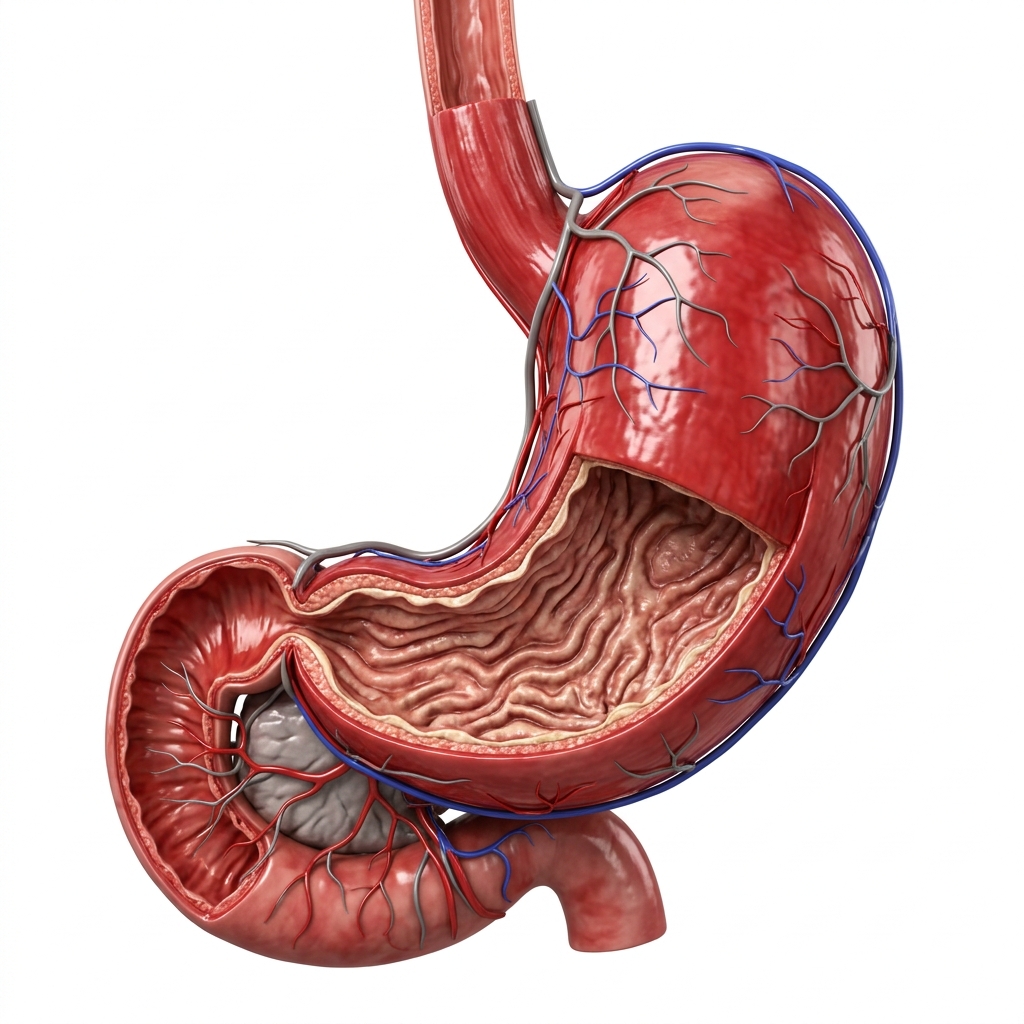
If you suffer from persistent burning sensations in your chest, sour fluid backflow, or chronic throat irritation, you may be experiencing Gastroesophageal Reflux Disease (GERD). In Guwahati, Dr. Dipankar Das offers advanced diagnostic screening and therapeutic management for acid reflux to restore your digestive health.
Understanding Acid Reflux & GERD
Acid reflux occurs when stomach acid flows back up into the tube connecting your mouth and stomach (esophagus). This backflow (acid regurgitation) can irritate the sensitive lining of your food pipe. Gastroesophageal reflux disease (GERD) is a chronic, more severe form of acid reflux that is diagnosed when reflux occurs more than twice a week or causes inflammation of the esophagus.
The main trigger behind GERD is the dysfunction of the Lower Esophageal Sphincter (LES) — a circular band of muscle at the bottom of your food pipe. Under normal conditions, the LES acts as a one-way valve, relaxing to allow food into the stomach and closing tightly to keep acids down. When the LES weakens or relaxes abnormally, gastric acids leak upward, causing tissue irritation.
Common Symptoms of Acid Reflux
Patients suffering from GERD experience a variety of signs. While some are common digestives, others can manifest as atypical symptoms that mimic respiratory issues:
- Heartburn: A burning sensation in the chest, usually after eating, which might be worse at night or when lying down.
- Regurgitation: Backflow of sour or bitter-tasting stomach acid into the mouth or throat.
- Dysphagia: Difficulty swallowing food or a sensation of a lump in the throat.
- Chronic Cough: Constant dry coughing caused by acid micro-inhalation irritating the respiratory tract.
- Laryngitis: Hoarseness of voice or throat irritation due to vocal cord acid burns.
- Atypical Chest Pain: Non-cardiac chest pain that requires clinical evaluation to rule out heart disease.
Diagnostic Approaches: Upper GI Endoscopy
Accurate diagnosis is crucial before starting treatment. Dr. Dipankar Das performs diagnostic Upper GI Endoscopy at Narayana Superspeciality Hospital, Guwahati, to visually examine the esophageal lining.
During an endoscopy, a thin, flexible tube equipped with a high-definition camera is inserted down the throat under mild conscious sedation. This allows the doctor to detect:
- Esophagitis: Inflammation or erosions on the esophageal lining.
- Esophageal Strictures: Narrowing of the food pipe caused by chronic acid scarring, which can make swallowing difficult.
- Barrett's Esophagus: A serious condition where the esophageal lining changes, increasing the risk of esophageal cancer.
- Hiatal Hernia: An anatomical condition where the upper part of the stomach pushes through the diaphragm.
Treatment Options for GERD
Management of acid reflux is customized based on severity, combining lifestyle changes, medication, and advanced endoscopic interventions:
- Lifestyle & Dietary Modifications:
Eat smaller, more frequent meals. Avoid triggers like fatty foods, citrus fruits, chocolate, caffeine, and alcohol. Do not lie down for at least 3 hours after dinner. Elevate the head of your bed by 6 inches.
- Pharmacotherapy:
Proton Pump Inhibitors (PPIs) and H2 blockers to suppress stomach acid production, and prokinetics to improve stomach emptying rates.
- Endoscopic Dilatation:
For patients who have developed esophageal strictures, endoscopic balloon dilatation is performed to widen the narrowing safely.
Why Consult Dr. Dipankar Das in Guwahati?
As a senior Gastroenterologist with DM training from the Institute of Medical Sciences, BHU Varanasi, Dr. Dipankar Das possesses extensive experience in dealing with complicated, non-responsive acid reflux cases. He is dedicated to prescribing personalized treatment plans that avoid unnecessary long-term medications whenever possible.